Hidden changes
Radiant Peptide Supply by scanner, microscope & mirror
A retatrutide trial brought liver fat into view. I prefer that kind of illumination: a change with a location, a measurement and a boundary.
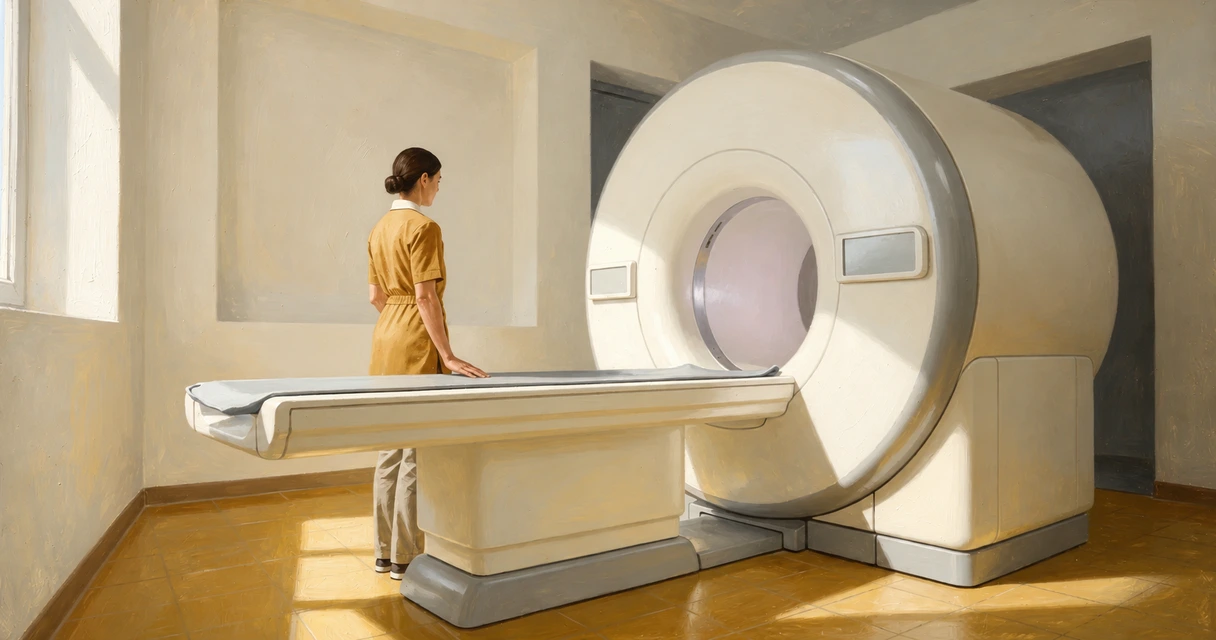
Liver fat on an MRI
The first result was hidden inside the liver. In a retatrutide liver-fat substudy, 98 adults with overweight or obesity and metabolic dysfunction-associated steatotic liver disease took part. At 24 weeks, the highest-dose group had an 82.4% relative reduction in liver fat; 86% in that group reached the study’s normal range, below 5% liver fat. The participants had no type 2 diabetes. Liver fat was measured by MRI.
That is an impressive change in a particular compartment. The percentage describes the reduction from the liver-fat amount at the start. It says nothing about losing that proportion of body weight, and reaching a liver-fat cutoff leaves other questions about liver health open.
“Radiant” evokes a bright complexion for me. Here it takes me towards an instrument making an otherwise hidden change measurable. An MRI can reveal something a mirror misses; even then, the result needs its units and its patients beside it.
Scanner, microscope, mirror
The scanner leads to two quite different fat stories. Tesamorelin reduced visceral fat in adults with HIV and abdominal fat accumulation. Retatrutide has human trial findings in obesity and metabolic disease, while remaining unapproved. The locations of these changes fascinate me, along with how easily the broad phrase “fat loss” flattens them.
The microscope brings a different scale. Human fibroblasts made more collagen with GHK-Cu in culture, without an increase in cell number. With KPV, intestinal-cell experiments and mouse colitis models point towards reduced inflammatory activity. These are useful findings in their own settings. A person’s recovery is a further thing to demonstrate.
Then there is the mirror: a smoother-looking face, a scalp that seems fuller, a complexion described as glowing. Those impressions can matter to the person seeing them. Controlled studies and anecdotes give them very different amounts of support.
Four places to look
- Retatrutide and liver fat: the dramatic scan result, the separate weight-loss trial and the pulse that also changed.
- Tesamorelin and visceral fat: a measured area inside the abdomen, a narrow approved use and fat that returned after treatment stopped.
- GHK-Cu in skin and hair studies: collagen production, the outer skin barrier and a hair trial with more than one active ingredient.
- KPV in inflamed bowel: tissue under a microscope, a cellular transporter and elaborate ways to protect a fragile peptide.
The measurement table puts the outcomes alongside their units. It is where I go when two impressive percentages begin to sound interchangeable.
Adverse observations
Behind an appearance, I look for measurable activity. Claims about whole-body benefits soon outrun the measurements. The retatrutide obesity trial recorded weight loss and a dose-related increase in heart rate. The longer tesamorelin study recorded a reduction in visceral fat during treatment and reaccumulation after discontinuation. Both observations deserve space.
GHK-Cu users describe smoother skin as well as irritation, and retatrutide communities describe reduced food thoughts alongside nausea and fatigue. These are anecdotal accounts, not clinical evidence; the accounts cannot establish the contents used, the cause of a change or how often a problem occurs. KPV’s human benefit and safety remain unestablished.
The papers are worth the trouble. The brighter prospect, to me, is understanding exactly what changed.